
Introduction
The Apple Product Price Hike 2026 has become one of the biggest talking points in the global technology industry.** Consumers are noticing higher prices across Apple’s product lineup, including the iPhone, MacBook, iPad, and Apple Watch. While inflation is often blamed, the actual reasons behind the Apple Product Price Hike 2026 include rising semiconductor manufacturing costs, increasing Artificial Intelligence (AI) demand, supply chain adjustments, and Apple’s continued investment in premium hardware and software.
Whether you’re planning to buy a new Apple device or simply want to understand why prices are increasing, this guide explains everything you need to know about the Apple Product Price Hike 2026.
Apple Product Price Hike 2026: Quick Summary
The Apple Product Price Hike 2026 is primarily driven by… have increased in 2026 because of rising semiconductor manufacturing costs, growing AI infrastructure demand, higher logistics expenses, continued investment in Apple Silicon and Apple Intelligence, and Apple’s long-term premium pricing strategy. Although prices have increased across multiple product categories, Apple continues to focus on delivering premium hardware, long software support, ecosystem integration, and advanced AI-powered experiences.
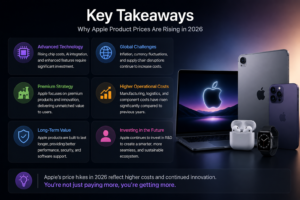
Key Takeaways
- AI infrastructure demand has increased global semiconductor manufacturing costs.
- Advanced chip production has become significantly more expensive.
- Apple continues investing billions in Apple Silicon and Apple Intelligence.
- Premium pricing remains a core part of Apple’s long-term business strategy.
- Trade-in programmes and certified refurbished products provide affordable alternatives.
- Premium smartphones continue to outperform many mid-range devices in long-term value.
Apple Product Price Hike 2026 at a Glance
| Factor | Impact on Apple Pricing |
| AI Infrastructure Demand | ⭐⭐⭐⭐⭐ Very High |
| Semiconductor Manufacturing Costs | ⭐⭐⭐⭐⭐ Very High |
| Apple Silicon Research & Development | ⭐⭐⭐⭐ High |
| Supply Chain & Logistics | ⭐⭐⭐⭐ High |
| Premium Brand Positioning | ⭐⭐⭐⭐ High |
| Inflation | ⭐⭐⭐ Medium |
| Currency Fluctuations | ⭐⭐⭐ Medium |
| Global Trade Policies | ⭐⭐⭐ Medium |
Why Is the Apple Product Price Hike 2026 Happening?
Apple products are becoming more expensive because multiple global economic and technological factors have increased manufacturing costs while Apple continues investing heavily in innovation, premium hardware, and ecosystem development.
Unlike many smartphone manufacturers that compete primarily on price, Apple follows a premium pricing strategy focused on long-term value rather than short-term affordability.
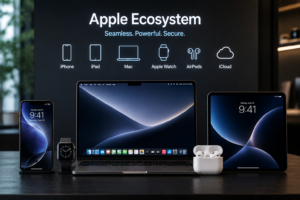
Every Apple device is part of a larger ecosystem that includes services such as iCloud, Apple Music, Apple Pay, FaceTime, iMessage, AirDrop, Apple Intelligence, and seamless continuity between iPhone, iPad, Mac, Apple Watch, and AirPods.
This tightly integrated ecosystem creates additional value for customers while allowing Apple to maintain premium pricing across its product lineup.
Rather than competing through discounts, Apple competes through:
- Innovation
- Premium industrial design
- Privacy and security
- Long software support
- High resale value
- Customer experience
- Ecosystem integration
- Brand trust
These competitive advantages enable Apple to maintain higher prices while continuing to attract millions of customers worldwide.
What Are the Main Reasons Behind the Apple Product Price Hike?
The Apple Product Price Hike 2026 is driven by several interconnected factors rather than a single cause. Increased AI demand, advanced semiconductor manufacturing, research and development, supply chain costs, and premium positioning all contribute to higher product prices.
The most significant reasons include:
- Rising semiconductor manufacturing costs
- Increasing AI infrastructure demand
- Investment in Apple Intelligence
- Continued Apple Silicon development
- Higher logistics and transportation costs
- Global supply chain adjustments
- Premium component sourcing
- Research and development spending
- Longer product support cycles
- Apple’s premium brand strategy
Each of these factors affects the final retail price consumers pay for Apple devices.
How Are Rising Manufacturing Costs Affecting the Apple Product Price Hike 2026?
Advanced Components Cost More Than Ever
Modern Apple products require increasingly sophisticated components that are significantly more expensive to manufacture than previous generations.
Today’s premium Apple devices include technologies that were considered cutting-edge only a few years ago, such as:
- High-resolution OLED displays
- Advanced camera systems
- Aerospace-grade aluminium and titanium materials
- High-density batteries
- Faster unified memory
- Custom Apple Silicon processors
- Dedicated AI processing hardware
- Advanced wireless communication technologies
Each new generation of hardware requires greater engineering precision, stricter quality control, and more advanced manufacturing processes.
As component complexity increases, production costs naturally rise, contributing to higher retail prices.
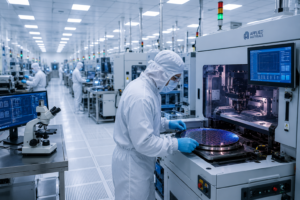
Higher Manufacturing Standards
Apple is known for maintaining some of the highest manufacturing standards in the consumer electronics industry.
From precision-machined aluminium enclosures to high-quality display calibration and advanced durability testing, Apple invests heavily in quality assurance throughout the production process.
These manufacturing standards improve product reliability and longevity but also increase production expenses.
Global Labour and Logistics Costs Continue to Rise
Labour expenses, shipping costs, energy prices, and international logistics remain higher than they were before the COVID-19 pandemic.
Although global supply chains have largely stabilised, manufacturers continue facing higher operational expenses compared to previous years.
These additional costs affect nearly every stage of Apple’s manufacturing process, from sourcing raw materials to delivering finished products worldwide.
Key Takeaway
Apple’s manufacturing costs are increasing because modern devices require more advanced components, stricter quality standards, higher labour costs, and increasingly sophisticated production technologies. These factors directly contribute to the Apple Product Price Hike 2026.
How Is Artificial Intelligence Driving the Apple Product Price Hike 2026?
The rapid growth of Artificial Intelligence (AI) is one of the biggest reasons Apple products have become more expensive in 2026. As global demand for AI hardware increases, semiconductor manufacturers are prioritising advanced chip production, making components more expensive for consumer electronics companies like Apple.
Artificial Intelligence is no longer limited to chatbots or virtual assistants. It now powers smartphones, laptops, cloud computing platforms, autonomous vehicles, healthcare systems, financial services, and enterprise software.
To support these AI workloads, technology companies are investing billions of dollars in powerful data centres equipped with high-performance processors, advanced graphics chips, and high-bandwidth memory.
This unprecedented demand has increased competition for advanced semiconductor manufacturing capacity, leading to higher production costs across the electronics industry.
Why AI Demand Increases Hardware Costs
Modern AI applications require significantly more computing power than traditional software.
As AI adoption grows worldwide, manufacturers require:
- More advanced processors
- Faster memory technologies
- Larger storage capacities
- Improved cooling systems
- Higher-performance semiconductor fabrication
Because production capacity for these advanced components is limited, prices naturally increase as demand continues to rise.
Apple must compete with other leading technology companies for access to advanced semiconductor manufacturing capacity while continuing to deliver the premium performance, reliability, and quality that customers expect from its products.
This growing competition for cutting-edge chip manufacturing has also accelerated Apple’s investment in artificial intelligence, leading to the development of Apple Intelligence—its next-generation suite of AI-powered features designed to enhance productivity, creativity, and everyday user experiences.
Apple Intelligence Is Driving New Hardware Requirements
Apple Intelligence represents Apple’s long-term vision for on-device artificial intelligence. Unlike many AI platforms that rely heavily on cloud processing, Apple has designed many of its AI features to run directly on supported iPhone, iPad, and Mac devices. This approach improves privacy, reduces latency, and delivers faster performance while keeping sensitive user data on the device whenever possible.
Apple Intelligence introduces features such as:
- Intelligent Writing Tools
- Image Playground
- Genmoji
- Enhanced Siri
- Smart Notification Summaries
- AI-powered photo editing
- Context-aware recommendations
- On-device language processing
Running these advanced AI features requires more powerful processors, increased memory bandwidth, and dedicated Neural Engine capabilities. As Apple continues integrating AI into its ecosystem, the hardware requirements for future devices become more demanding, contributing to higher research, development, and manufacturing costs.
Key Takeaway
Artificial Intelligence is increasing Apple product prices because advanced AI features require more powerful processors, specialised hardware, and access to increasingly expensive semiconductor manufacturing technologies.
How Does Apple Silicon Influence the Apple Product Price Hike 2026?
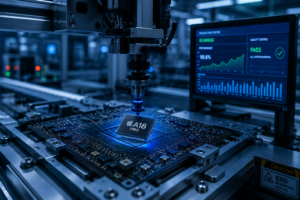
Apple Silicon has transformed Apple’s product lineup by delivering industry-leading performance and power efficiency. However, designing and manufacturing these advanced processors requires substantial investment, contributing to higher production costs.
Since transitioning away from Intel processors, Apple has invested heavily in developing its own custom chips.
This strategy gives Apple greater control over:
- Performance
- Battery efficiency
- Security
- Machine learning capabilities
- Software optimisation
- Long-term product support
Although Apple Silicon reduces long-term dependence on third-party processor manufacturers, developing these chips requires billions of dollars in engineering, research, software optimisation, and manufacturing partnerships.
Why Advanced Semiconductor Manufacturing Costs More
Manufacturing today’s processors is significantly more complex than producing chips just a few years ago.
Advanced semiconductor fabrication requires:
- Extreme precision manufacturing
- Highly specialised equipment
- Cleanroom facilities
- Extensive quality testing
- Years of research and development
As manufacturing technology becomes more sophisticated, production costs continue to increase.
These costs are reflected in premium consumer devices, including iPhones, MacBooks, and iPads.
Better Performance Comes at a Higher Cost
Each new generation of Apple Silicon delivers improvements such as:
- Faster application performance
- Improved graphics processing
- Longer battery life
- Better AI processing
- Enhanced security
- Lower power consumption
While these innovations improve the user experience, they also require substantial investment in engineering and manufacturing.
Apple positions these advancements as long-term value rather than short-term affordability.
Key Takeaway
Apple Silicon provides significant performance improvements but also increases research, engineering, and manufacturing costs, contributing to Apple’s premium pricing strategy.
How Do Supply Chain Challenges Affect the Apple Product Price Hike 2026?
Although global supply chains have improved since the COVID-19 pandemic, they continue to face challenges that increase manufacturing expenses for technology companies worldwide.
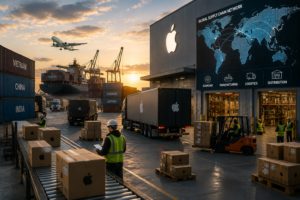
Apple manages one of the world’s largest and most complex supply chains.
Its products rely on thousands of suppliers across multiple countries, making even small disruptions capable of affecting production costs.
Several factors continue influencing Apple’s supply chain:
- Transportation costs
- Energy prices
- Raw material availability
- Geopolitical uncertainty
- Regional manufacturing constraints
- Currency fluctuations
While consumers may not notice these behind-the-scenes challenges, they significantly influence the final retail price of Apple products.
Apple’s Global Manufacturing Network
Apple works with suppliers across Asia, Europe, and North America to manufacture and assemble its products.
Maintaining quality standards across such a large supply chain requires:
- Supplier audits
- Environmental compliance
- Worker safety programmes
- Quality inspections
- Inventory management
- Logistics coordination
These operational requirements contribute to overall production expenses.
Why Doesn’t Apple Simply Reduce Prices?
Many consumers ask why Apple doesn’t absorb these additional costs instead of increasing prices.
The answer lies in Apple’s long-term business model.
Rather than sacrificing research, product quality, or customer support, Apple generally chooses to preserve its premium positioning while continuing to invest in future innovation.
This strategy has helped Apple maintain one of the highest customer loyalty rates in the technology industry.
Key Takeaway
Supply chain challenges continue increasing Apple’s operational costs. Rather than compromising product quality or innovation, Apple incorporates these expenses into its long-term pricing strategy.
Why Does Apple Continue Investing Billions in Innovation?
Research and development remain central to Apple’s long-term strategy. Continuous investment in new technologies helps Apple maintain its competitive advantage but also contributes to higher product prices.
Apple consistently invests billions of dollars annually to develop technologies that improve performance, privacy, security, and user experience.
Major areas of investment include:
- Apple Intelligence
- Apple Silicon
- Machine Learning
- Health Technologies
- Advanced Camera Systems
- Battery Technology
- Privacy & Security
- Satellite Connectivity
- Mixed Reality
- Wearable Devices
These innovations require years of research before reaching consumers.
Innovation Creates Long-Term Value
Unlike companies that focus primarily on reducing costs, Apple invests heavily in technologies that extend the lifespan of its products.
Examples include:
- Five to seven years of software updates
- Industry-leading security features
- Long battery lifespan
- High resale value
- Consistent ecosystem integration
Although this increases manufacturing and development costs, many consumers view these benefits as worthwhile long-term investments.
Apple Product Price Timeline (2020–2026)
| Year | Major Industry Development | Impact on Pricing |
| 2020 | Apple Silicon introduced | Improved performance and increased R&D investment |
| 2021 | Global semiconductor shortage | Component costs increased |
| 2022 | Inflation and logistics expenses rose | Manufacturing costs increased |
| 2023 | AI infrastructure demand accelerated | Semiconductor demand surged |
| 2024 | Advanced AI hardware adoption expanded | Premium chip production became more expensive |
| 2025 | Continued investment in Apple Intelligence | Higher AI hardware requirements |
| 2026 | Apple product prices increased across several categories | Combined impact of manufacturing, AI, and premium strategy |
Key Takeaway
Apple’s pricing strategy reflects years of continuous investment in innovation rather than short-term market conditions. Rising manufacturing expenses, AI-driven hardware requirements, and long-term research all contribute to higher product prices while supporting future technological advancements.
What Technology Trends Are Influencing Apple Product Prices?
Several broader technology trends are shaping not only Apple’s pricing decisions but also the entire consumer electronics industry.
In the next section, we’ll explore:
- Why consumers are upgrading devices less frequently
- How the refurbished Apple market is growing
- Why premium smartphones continue outperforming budget devices
- Consumer reactions to rising Apple prices
- What marketers can learn from Apple’s pricing strategy
These trends provide important context for understanding why Apple continues to succeed despite increasing prices.
Why Are Consumers Upgrading Their Apple Devices Less Frequently?
Consumers are keeping their Apple devices for longer because modern iPhones, iPads, and Macs offer better durability, longer software support, and improved hardware performance than previous generations. As upgrade cycles become longer, Apple increasingly focuses on premium products with higher average selling prices (ASP) to maintain revenue growth.
A decade ago, many smartphone users upgraded their devices every one or two years. Today, that trend has changed dramatically.
Modern Apple devices receive software updates for five to seven years, while improvements in battery life, processor performance, and durability allow many users to comfortably use their devices for much longer.
Longer upgrade cycles mean Apple sells fewer replacement devices to existing customers each year. To offset this slower replacement rate, the company focuses on delivering higher-value premium devices with advanced features and stronger ecosystem integration.
Why Is the Refurbished Apple Market Growing?
Certified refurbished Apple products have become increasingly popular because they offer premium performance at a lower price while still receiving software updates and official support.
As new Apple products become more expensive, many consumers are choosing certified refurbished devices instead of purchasing brand-new models.
Apple’s Certified Refurbished programme provides products that undergo rigorous testing, include genuine Apple parts where required, and come with warranty coverage.
Refurbished devices are particularly attractive for:
- Students
- Small businesses
- First-time Apple users
- Budget-conscious consumers
- Families purchasing multiple devices
Combined with Apple’s Trade In programme, refurbished devices help make the Apple ecosystem more accessible without significantly compromising performance or reliability.
Why Do Premium Smartphones Continue to Perform Well?
Despite higher prices, premium smartphones continue to dominate the market because many consumers prioritise long-term value, reliability, security, and software support over the lowest purchase price.
Today’s buyers often evaluate a device based on its total ownership experience rather than its initial cost.
Premium Apple devices offer advantages such as:
- Long software support
- Excellent resale value
- High build quality
- Industry-leading privacy features
- Strong ecosystem integration
- Reliable performance over several years
Although premium devices require a higher upfront investment, many consumers consider them more cost-effective over their entire lifespan.
How Are Consumers Responding to Apple’s 2026 Price Increases?
Consumer reactions to Apple’s 2026 pricing have been mixed. While some users continue upgrading because of Apple’s ecosystem and long-term value, others are delaying purchases or exploring refurbished alternatives.
Many loyal Apple customers view higher prices as acceptable because they value:
- Product reliability
- Long software support
- Better resale value
- Privacy and security
- Ecosystem integration
- Consistent user experience
However, students, first-time buyers, and budget-conscious consumers are increasingly comparing Apple products with premium Android alternatives before making purchasing decisions.
Flexible financing options, trade-in programmes, and refurbished devices are becoming more important as consumers seek ways to reduce upfront costs.
Who Should Buy an Apple Device in 2026?
Choosing the right time to buy depends on your needs rather than market trends alone.
| User | Recommendation |
| Students | Consider educational discounts or certified refurbished devices. |
| Professionals | Premium Macs and iPads remain excellent long-term investments for productivity. |
| Content Creators | Newer Apple Silicon devices provide significant performance improvements for creative workflows. |
| Casual Users | If your current device works well, waiting for seasonal promotions may offer better value. |
| Businesses | Trade-in programmes and bulk purchasing options can help reduce upgrade costs. |
What Can Digital Marketers Learn from Apple’s Pricing Strategy?
Apple demonstrates that strong branding, customer experience, and product differentiation can support premium pricing even in highly competitive markets.
Rather than competing primarily on discounts, Apple focuses on creating long-term customer relationships built around trust, quality, and ecosystem integration.
Several marketing principles contribute to Apple’s success.
Premium Brand Positioning
Apple consistently positions itself as a premium technology and lifestyle brand rather than simply a hardware manufacturer.
This positioning allows the company to compete on perceived value instead of price.
Emotional Storytelling
Apple advertisements rarely focus only on technical specifications.
Instead, they demonstrate how products improve creativity, productivity, communication, and everyday life.
This emotional connection strengthens customer loyalty.
Exceptional Customer Experience
Apple Stores, online support, software integration, and after-sales service work together to create a consistent customer experience.
Satisfied customers are more likely to remain within the Apple ecosystem and recommend Apple products to others.
Ecosystem Marketing
Perhaps Apple’s greatest competitive advantage is its ecosystem.
Features such as AirDrop, iCloud, FaceTime, Apple Pay, Apple Music, Handoff, and Apple Intelligence create a seamless experience across multiple devices.
As customers invest in additional Apple products, switching to another platform becomes increasingly difficult.
Should You Buy Apple Products Despite the Apple Product Price Hike 2026?
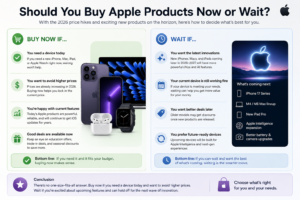
The best time to buy depends on your current device, budget, and intended use rather than price increases alone.
Buying now may be worthwhile if:
- Your current device is no longer reliable.
- You need improved performance for work or study.
- Trade-in offers significantly reduce the purchase price.
- Educational discounts are available.
Waiting may be the better option if:
- Your current device still performs well.
- You expect seasonal promotions.
- You’re considering certified refurbished products.
- You’re waiting for a future product release with features that better meet your needs.
What Does the Future Hold for Apple Product Pricing?
Apple is expected to continue investing heavily in Artificial Intelligence, custom silicon, software innovation, and ecosystem development. As a result, premium devices are likely to remain expensive while delivering increasingly advanced capabilities.
Future developments may include:
- More powerful Apple Intelligence features
- Better on-device AI processing
- Improved battery efficiency
- Faster Apple Silicon processors
- Enhanced privacy protections
- Deeper integration between Apple devices
Although manufacturing costs may stabilise over time, Apple is unlikely to abandon its premium pricing strategy.
Instead, consumers can expect higher-value products with increasingly sophisticated capabilities.
Frequently Asked Questions
Why did Apple increase product prices in 2026?
Apple product prices increased because of rising manufacturing costs, AI-driven semiconductor demand, supply chain adjustments, continued investment in Apple Silicon, and its premium pricing strategy.
Does Artificial Intelligence increase Apple product prices?
Yes. AI has significantly increased global demand for advanced semiconductor manufacturing, making processors and other components more expensive.
Why are MacBooks becoming more expensive?
MacBooks incorporate advanced Apple Silicon processors, premium displays, high-quality materials, and long software support, all of which contribute to higher production costs.
Are refurbished Apple products worth buying?
Certified refurbished Apple products provide excellent value for many consumers because they combine lower prices with reliable performance and ongoing software support.
Will Apple prices continue increasing?
Future pricing will depend on manufacturing costs, semiconductor demand, technological innovation, and global economic conditions.
Why does Apple maintain premium pricing?
Apple focuses on innovation, quality, ecosystem integration, customer experience, privacy, security, and long-term product value rather than competing primarily on price.
Should students buy a new Apple device?
Students should compare educational discounts, refurbished products, and trade-in offers before making a purchase.
Does Apple offer affordable upgrade options?
Yes. Apple provides Trade In programmes, financing options in many regions, and certified refurbished products to help reduce the cost of upgrading.
Final Thoughts
The Apple Product Price Hike 2026 is not the result of a single event but the combined effect of technological innovation, rising semiconductor manufacturing costs, AI infrastructure demand, global supply chain challenges, and Apple’s long-term premium business strategy.
Although higher prices may discourage some consumers, Apple continues to attract millions of loyal customers because it consistently delivers high-quality products supported by long software updates, strong privacy protections, excellent resale value, and seamless ecosystem integration.
For consumers, understanding these pricing factors can help make better purchasing decisions. For marketers and business professionals, Apple’s strategy demonstrates how innovation, customer experience, and brand positioning can justify premium pricing in a competitive global market.
As Artificial Intelligence continues reshaping the technology industry, Apple’s ability to combine advanced hardware, software, and ecosystem services will likely remain one of its strongest competitive advantages.
If you’re planning to purchase a new Apple device, you may also enjoy our article “Why Professionals Are Switching to Macs in 2026,” where we explore why businesses, creators, and professionals continue choosing Macs despite rising prices.
Sources and References
The information in this article is based on publicly available information from industry reports, company announcements, and technology market analysis.
Recommended reference sources include:
- Apple Official Website
- Apple Newsroom
- Apple Investor Relations
- Apple Environment
- Apple Supplier Responsibility
- Apple Trade In
- Apple Certified Refurbished
- Counterpoint Research
- IDC
- Canalys
- Reuters Technology
- Bloomberg Technology
Last Updated: July 2026